carrying wor(l)ds
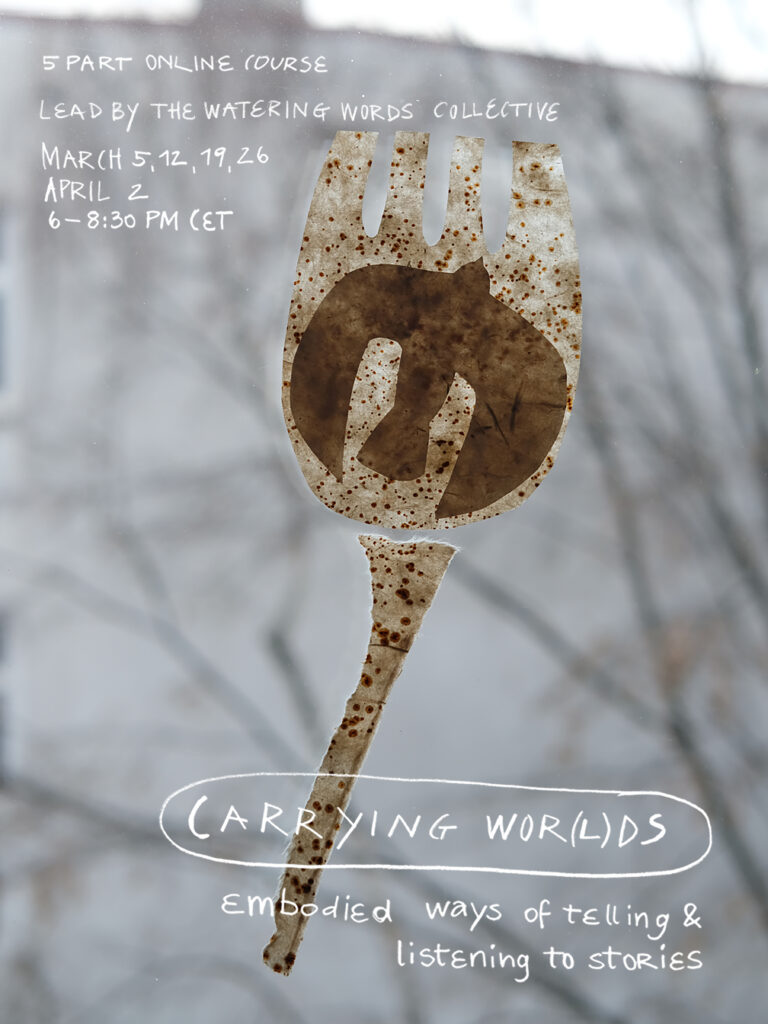
In this 5-week course we will explore embodied ways of sharing and creating stories, expanding beyond the wor(l)dy universe of written and spoken language. We will reflect on the importance of carrying stories in the uncertain times of the anthropocene, and how this shared responsibility unfolds as an act of interspecies care. Storytelling is said to be a deeply intrinsic feature of human beings but in which ways do animals, places or materials tell stories too, and what kind of futures might be dreamed up from them? We invite you to read, watch, listen and discuss together but also to move, get crafty, write, draw, compose, or unleash your creativity in any other desired way.
Scroll down for an overview of the course program, info on the facilitators and our pricing model.
course program:
Thursday March 5th 2026, 18:00 – 20:30 CET
Containing, spilling, moving what is stor(i)ed inside us – led by Kai Feldhammer, Joanna Gruntkowska & Małgorzata Suś
The first session will offer space for the introduction, getting to know each other and giving a brief overview of what’s to come in the following weeks. We will start off the course with a guided movement practice, led collectively. We will also offer the first prompts for creating and storytelling. Taking as an inspiration and a starting point Ursula Le Guin’s story “‘The Author of the Acacia Seeds’ and Other Extracts from the Journal of the Association of Therolinguistics”, and following on that chapter from Donna Haraway’s “Staying with the Trouble”, we will look at ourselves as containers for stories. How do we carry that which is already stor(i)ed inside our bodies? We will attempt a creation of story-containers, both individual and collective, and reflect on how the held stories can be carried, passed over, and shared.
Thursday March 12th 2026, 18:00 – 20:30 CET
Stories rooted in(between) the bodies – led by Joanna Gruntkowska
How do stories take shape inside the body, and how does the body become a carrier of stories? Starting from Ursula K. Le Guin’s “Carrier Bag Theory of Fiction”, we will critically reflect on what we already carry. In this session we will work somatically, drawing on Body–Mind Centering®, imagination, and embodied listening. Beginning with the enteric nervous system and the landscape of the organs, we will ask: how can I dive into my body and into the stories it already holds? What narratives emerge when attention shifts from representation to sensation, from telling to listening? Through making kin with our internal world and its more-than-human inhabitants, we will explore how relationships with outside species can be mediated through inside species. How do I listen? With what do I listen? And what do I hear when organs, fluids, and microbes become storytellers?
Thursday March 19th 2026, 18:00 – 20:30 CET
Searching for the lost lyrics of the siren song – led by Małgorzata Suś
What does it take to become a story? How do you transform into a mythical creature? Can you imagine a world in which the human presence is known only from stories? And who would carry those stories?
In this session we will reflect on the case of an extinction of the Steller’s Sea Cow, the biggest ever known sireninan species, whose eradication had an anthropogenic cause. We will try to reimagine the animal and listen to its story, to envision ways in which its lost existence can be carried through memory and storytelling. We will ponder on how the responsibility for the disappearance of many other-than-human beings can fuel an improvement of the future interspecies relationships. In this session, we will let our bodies be the source of the story; we will explore how embodied images and information transform through movement, and what new vocabulary emerges out of the corporeal approach to storytelling?
Thursday, March 26th 2026, 18:00 – 20:30 CET
Of selkies, spores and sediments. Folktales and stories of place – led by Kai Feldhammer
Folklore is an ecosystem of stories, ever changing, evolving and morphing– it tells of specific places and how their manifold inhabitants might have shaped or could continue to shape them; it is lived and enlivened collectively. Often these stories contain local ecological knowledge that is based on collective practice and direct engagement with the environment. How can looking at folktales or myths and their more-than-human protagonists offer different ways to speculate about possible futures for a place, a species, an entire web of relations?
This session will look at the folklore of shapeshifting creatures, what they might teach us and how spores or the cycle of rocks might be their relatives. Based on this and through taking a „yes, and…“ approach instead of a linear or binary one, we will experiment with different ways of creating playful stories that are rooted in the physical reality of the place they were formed in.
Thursday, April 2nd 2026, 18:00 – 20:30 CET
Carrying and caring together – led by Kai Feldhammer, Joanna Gruntkowska & Małgorzata Suś
In the final session we will approach a co-creation of a common story, told collectively by all participants of the course. What topics will arise and where will it take us? We’ll propose everyone to follow this journey and contribute to the shared narrative, engaging with our voices, imagination, and corporeal language. Before closing the course, we will also review what has been created in the previous weeks, what individual stories emerged, and how and where they can be carried further.
We will reflect together about the importance of storytelling and envision and dream ways of inviting this practice to our daily lives, both in the human and interspecies realm.
Each session will be recorded and recordings will be provided to all participants of the course.
meet the facilitators:
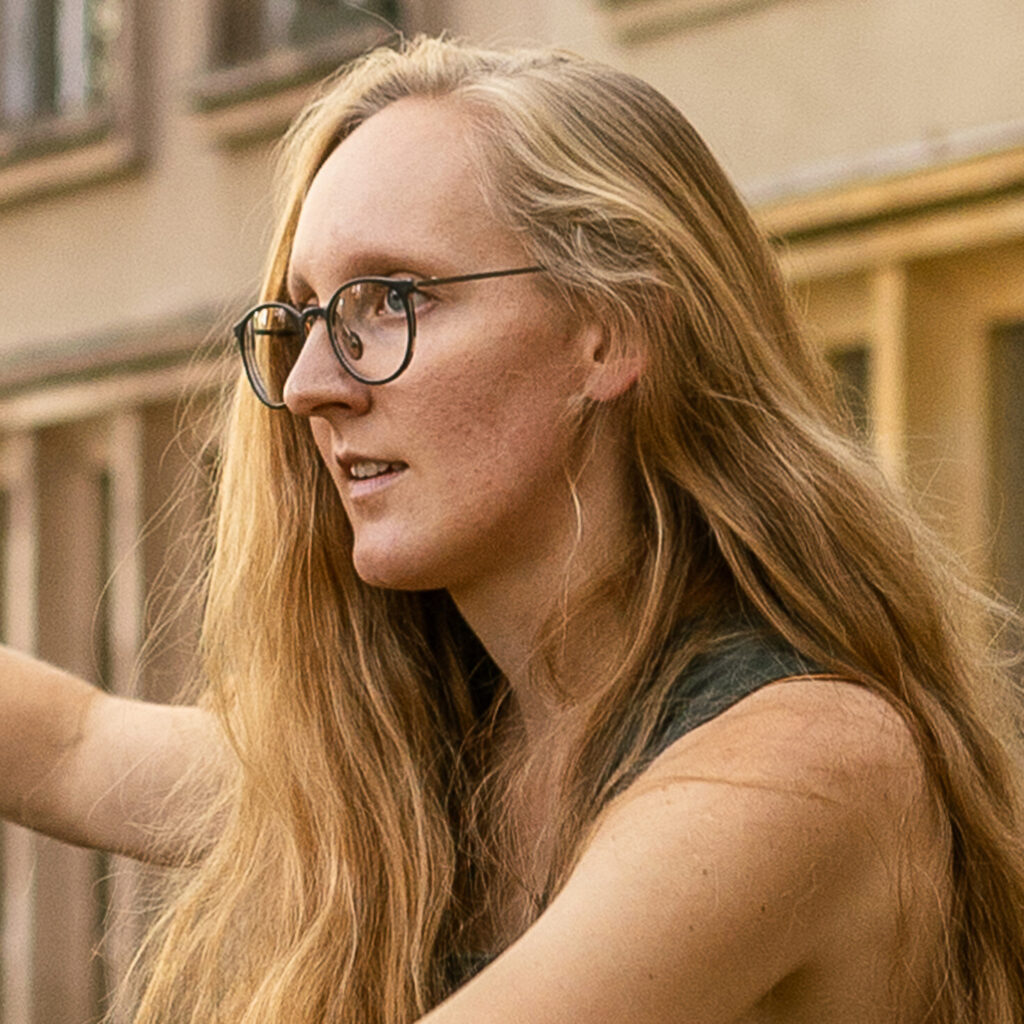
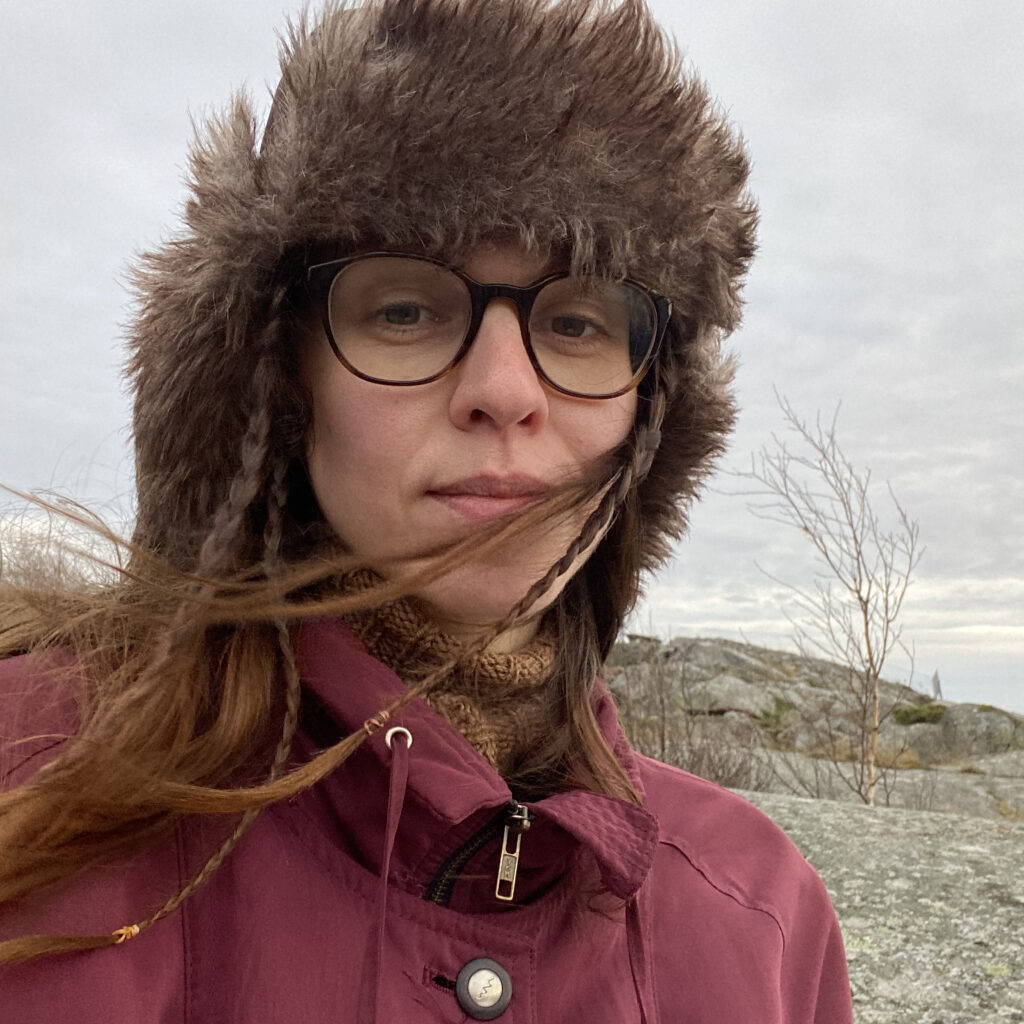
Joanna Gruntkowska (b. 1991, Poland) is a dancer and choreographer whose practice brings together contemporary dance, experimental choreography, somatic methods and experience in physical theatre. She works at the intersection of ecosomatics, dance improvisation and environmental humanities, and is currently in the process of Body–Mind Centering® certification. Her work approaches embodied research as a way of sensing, imagining and reconfiguring relationships between human and more-than-human bodies. She is a co-creator of the Watering Words collective and of the duo Liquid Forms, where she explores the performative potential of Le Guin’s Carrier Bag Theory of Fiction, weaving it through somatic practices and embryology. She is interested in translating scientific phenomena into bodily experience and in developing improvisational and compositional tools that allow performers and participants to connect with the materiality and intelligence of their surroundings. Her projects often take the form of open workshops, emphasizing collective knowledge-making, care and community-building through artistic practice. Besides, she still dances.
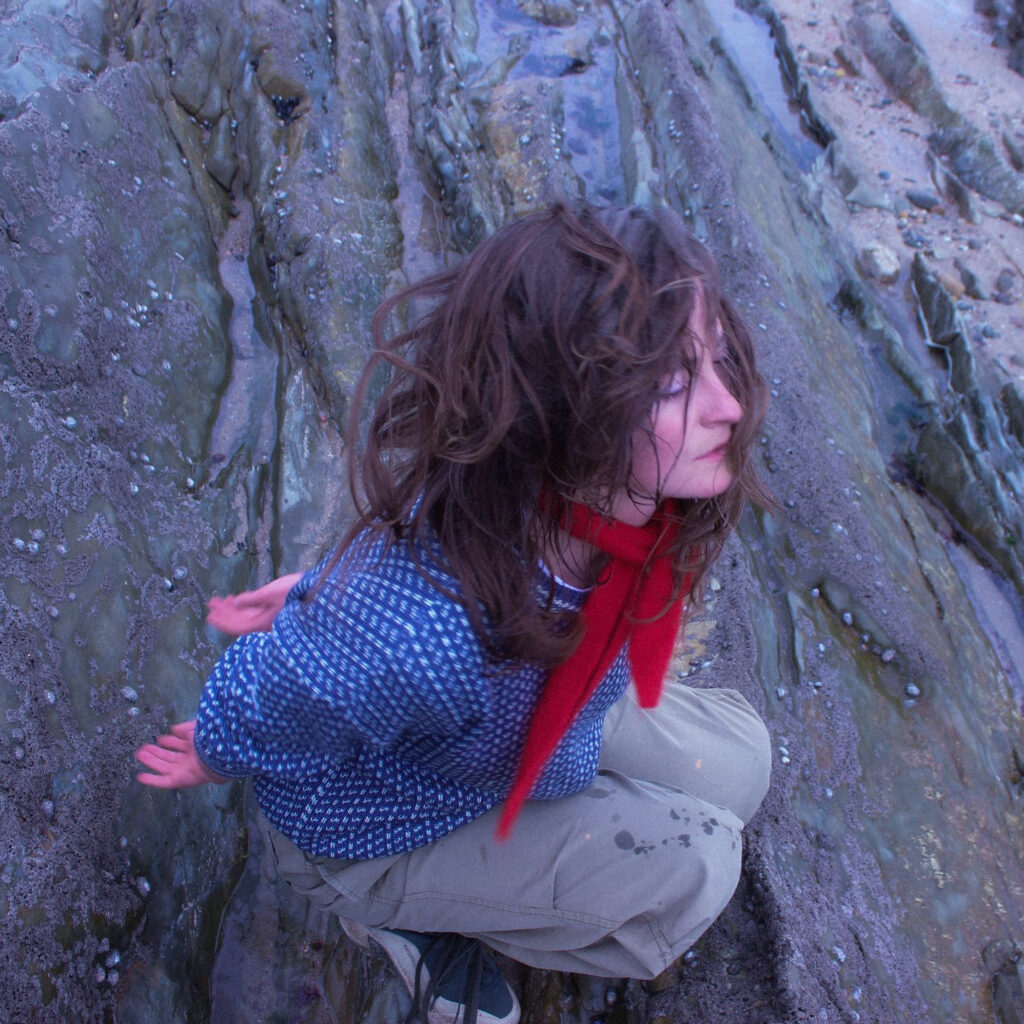
Małgorzata Suś (b. 1991, Poland) is a Portugal-based dancer, performer and choreographer working cross-disciplinarily with visual arts, poetry and science. Her practice is dedicated to researching the connection between body, movement and nature, taking inspiration primarily from water environments. Nourished by ideas of hydrofeminism and environmental humanities, her works are oriented towards bringing attention and care to other-than-human beings. Co-creator of The Memory of Water project and co-founder of Watering Words collective. Creator of multiple site-specific projects, dance solos, short movement films, exhibitions, multidisciplinary installations, and stage performances. She’s been working as a performer with a variety of landscapes, frequently exposed to harsh weather conditions. She’s interested in how science and art can cross-pollinate each other and what impact on improving ecological awareness can we achieve through creativity and social inclusion projects. Recently, Małgorzata has become an artist-in-residence of the S+T+ARTS Aqua Motion program 2025/26.
Kai Feldhammer (b. 1991, Austria) is an interdisciplinary artist and puppet-maker, based in Vienna. Their practice moves somewhere between installation, writing, performance, film and printmaking. Kai’s projects seek out various ways of (re)telling stories around ecological transformation, that are mainly carried by folklore, embodied knowledge and memory, and interweave the real with the speculative. He is interested in how these stories help to build bridges between people’s imagination and the perception of other beings.
They are part of the Watering Words collective and often collaborate with people from all different fields of practice or knowledge, in order to create imaginative worlds that highlight and foster curiosity and a sensual connection to the environment. Kai frequently facilitates workshops or skillsharing sessions such as Butoh improvisation, alternative printmaking processes, creative writing or the basics of mask- and puppet-making.
ticket & pricing info:
Pricing
We are working with a sliding scale payment model. What you pay is based on your relative financial standing:
Supporter Tickets are for those who have some expendable financial resources and would like to help fund a subsidised ticket.
General Admission represents the true cost of a course place.
Subsidised Tickets are for those who cannot afford the price of a General Admission ticket. There are five places available at this price.
There are two places available on the course that can be booked with a symbolical price of 1€. These are available on a first-come, first-served basis with no requirement to disclose financial or personal information.
Supporter: 120€
General Admission: 100€
Subsidised: 80€ (5 available)
Symbolical: 1€ (2 available)
Refund & Cancellation Policy
Ticket refunds can be made up to 7 days before the start of the course. After this, no refunds or cancellations will be made. If you have questions or concerns about this, please contact [email protected] before booking.
We reserve the right to cancel the course if we do not meet a minimum number of registrants. In this instance, all tickets will be fully refunded, minus payment processing fees.
frequently asked questions:
Who is this course for?
Anyone who is interested in creative and imaginative practices – this could be, but is not limited to writing, dancing, or any other kind of art-making.
How big is the group?
The maximum of participants for this course is 30.
Will I be expected to have my camera on or speak?
Everyone is free to engage with each session in whichever way works best for them – with or without camera; sharing thoughts and ideas verbally or in written form in the chat or in an email afterwards, or not at all.
Do I need to share what I have created for each session?
There will be designated time slots in each session for a collective discussion or the possibility of presenting, for those who would like to share something with the group. But nobody is ever put on the spot or required to share or show anything.
Will I be expected to do ‘homework’?
Although reading material and prompts or invitations to write/ create will be offered for each session, it is never a requirement to follow them or have anything prepared. You are free to engage with these materials when and in any way you want.
What if I cannot make it to every single session?
No worries! A recording of each session will be provided to all participants after each meeting.
References:
- Stacy Alaimo, Bodily Natures: Science, Environment, and the Material Self
- Bonnie Bainbridge Cohen, Sensing, Feeling, and Action
- Jane Bennett, Vibrant Matter
- Leanne Betasamosake Simpson, Theory of Water: Nishnaabe Maps to the Times Ahead
- Silvia Federici, Re-Enchanting the World: Feminism and the Politics of the Commons
- Amitav Ghosh, The Nutmegs Curse
- Alexis Pauline Gumbs, Undrowned.
- Donna J. Haraway, Staying with the Trouble
- Ursula K. Le Guin, The Carrier Bag Theory of Fiction
- Anna Lowenhaupt-Tsing, The Mushroom at the End of the World
- Anna Lowenhaupt-Tsing, Heather Swanson, Elaine Gan, Nils Bubandt, Arts of Living on a Damaged Planet
- Anthony Nanson, Storytelling and Ecology
- Astrida Neimanis, Bodies of Water: Posthuman Feminist Phenomenology
- Iida Turpeinen, Beasts of the Sea